
-
Fire Safety and Prevention at Events and Festivals – Fire Extinguisher Types and Applications


Having the proper type, size, and amount of fire extinguishers at your event or festival is of the utmost importance for maintaining proper fire safety. This article will discuss the types of fire extinguishers you’ll need given what sort of materials you have at your event, as well as how many you should have, and how to best use the fire extinguisher.
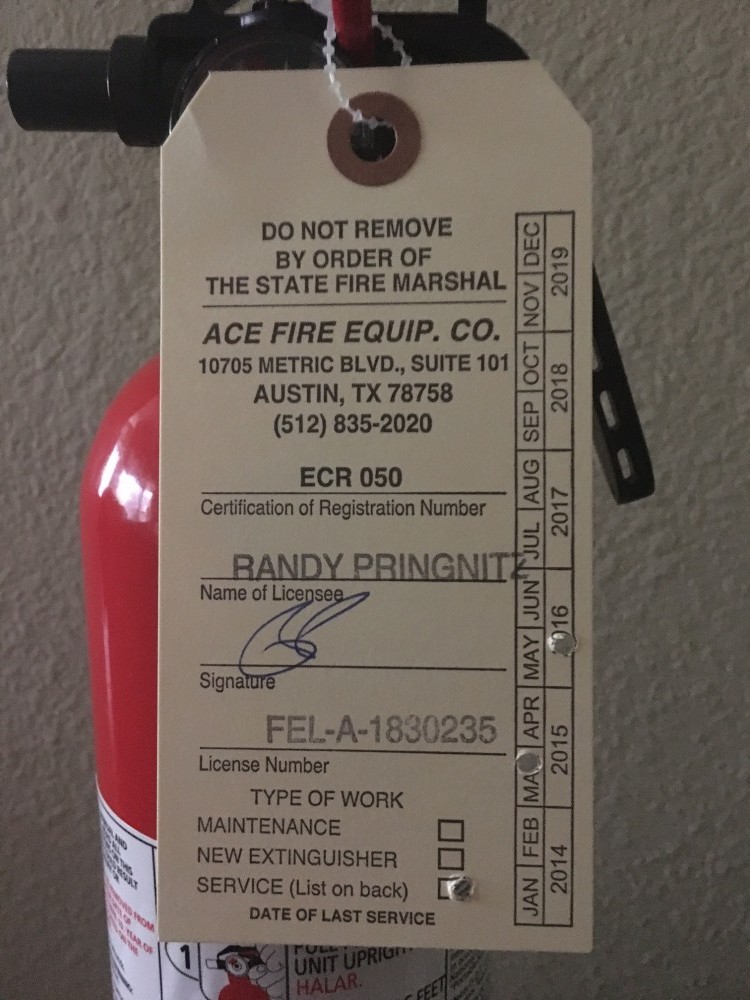
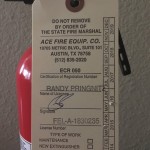 Remember that if you purchase a fire extinguisher, it will need to be inspected every year. Every fire extinguisher should have a tag on it, like the one to the left, that shows the day and month it was last inspected (note – it does NOT indicate the expiration date; keep that in mind when scheduling your next inspection). These inspections are inexpensive – around $10 per unit – and imperative to keep the extinguisher properly pressurized and ready to work as designed.
 Local fire extinguisher rental / sales companies will also offer fire extinguisher training classes – in Austin, Longhorn Fire Safety offers training that averages out to $25 per student in groups of 10.
First, we will look at the classes of fires and which ones you’ll be most likely to see:
Classes of Fires:
 Class A – the most likely type to occur at events and festivals – involves materials like paper, wood, rubber, or fabrics.
The best type of fire extinguisher for these kinds of fires is an ABC dry chemical based extinguisher. Class B – involves flammable liquids like gas, oil, paint and flammable gasses. If your event has any pyro, cryo, or anything involving tanks of gas, you will need to protect yourself against this type of potential fire.
The best type of fire extinguisher for these kinds of fires is an ABC dry chemical extinguisher, but a CO2 / chemical based extinguisher could also be beneficial here. Class C – involves live electrical equipment (generators, transformers, lighting gear, audio gear, etc)
The best type of fire extinguisher for these kinds of fires is an ABC dry chemical based extinguisher. Class D – involves combustible metals like sodium or lithium. Events and festivals won’t likely see any fires from this class, but if so, salt-based chemicals will be needed to extinguish them.
 Class K – involve fires in cooking ovens and other cooking appliances which involve cooking related materials like vegetable oils or fats. Class K fire extinguishers that include a low pH agent help prevent grease splash and fire flare ups while bringing the fire and heat under control. Events and festivals with food vendors, catering, and/or other onsite food preparation will want to have Class K extinguishers on-hand.
Types of Fire Extinguishers
(photos and descriptions courtesy of Longhorn Fire Safety):
- Dry Chemical
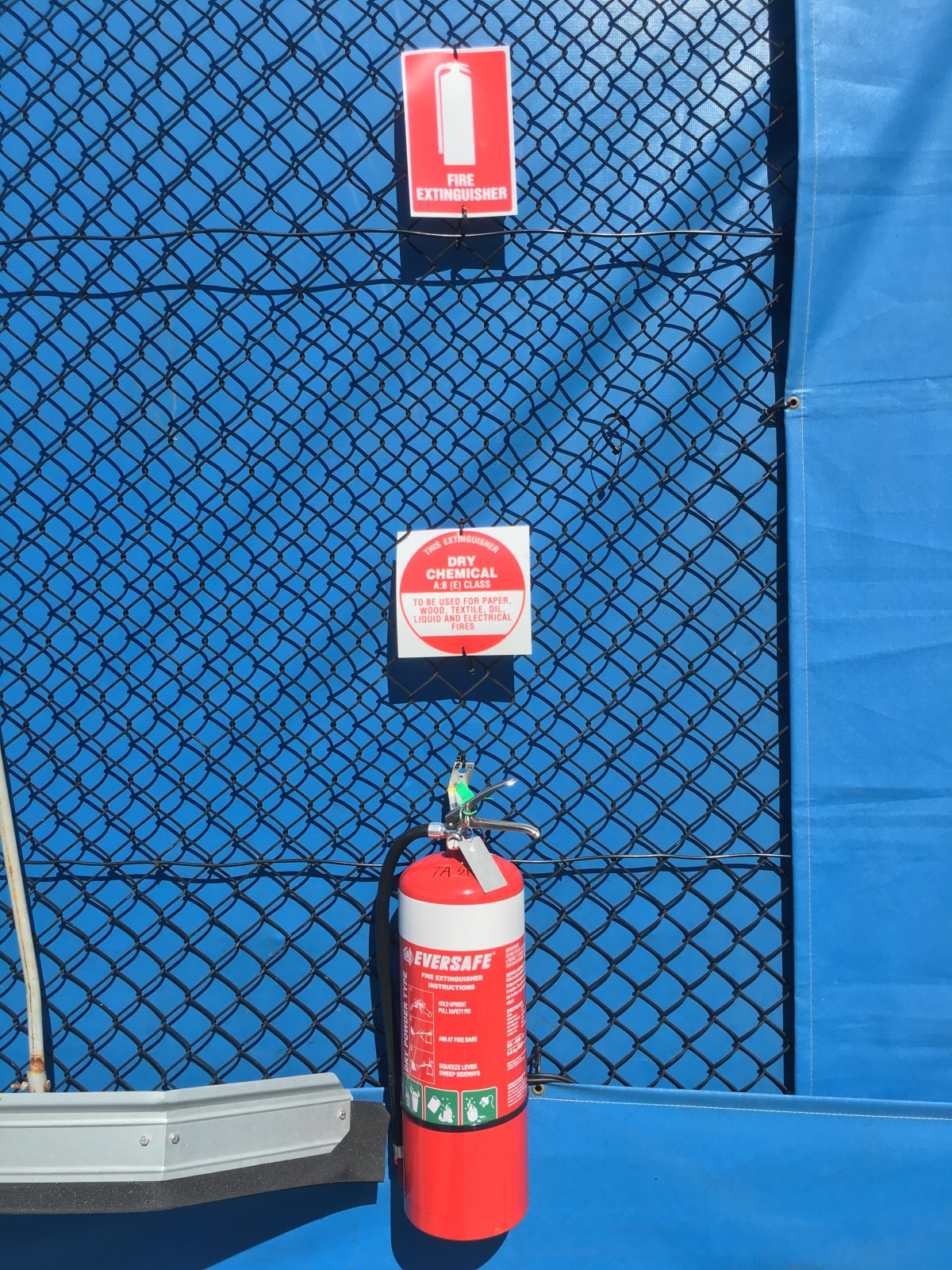
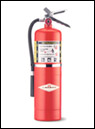 ABC – use a monoammonium phosphate dry chemical to insulate Class A fires by melting and clinging to the heated surface, smother and break the chain reaction on Class B fires and are non-conductors of electricity. This is the type of extinguisher that must be present at all events and festivals.
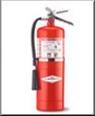 BC – contain a siliconized sodium bicarbonate based dry chemical. Suitable for combating flammable liquid and pressurized gas fires, these extinguishers are electrically non-conductive. These types of extinguishers are not common in the event world as the vast majority of jurisdictions that oversee events and festivals require an ABC extinguisher.
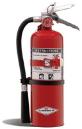 Purple K – contain specially fluidized and siliconized potassium bicarbonate dry chemical, which is particularly effective on Class B flammable liquids and pressurized gases. Note that these types of extinguishers are NOT effective against Class K fires. Events and festivals will likely never need a Purple K extinguisher on-site.
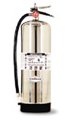 Pressure Water – non-toxic, ozone-friendly, ideal for Class A fires and common combustible materials such as trash, wood and paper. These extinguishers are rarely found and are mostly outdated as ABC Extinguishers are much more efficient.
 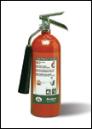 Carbon Dioxide (CO2) – use a monoammonium phosphate dry chemical to insulate Class A fires by melting and clinging to the heated surface. These are often on-hand when there is pyro as a way to treat anyone involved in a fire without using the more corrosive and less human friendly ABC dry chemcials.
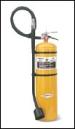 Class D Salt-Based – are designed for use on combustible metal fires. Fitted with a “soft-flow” extension applicator to keep operator away from extreme heat and toxic fumes caused by burning material. These are rarely if ever used or needed for events and festivals.
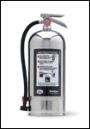 Class K Wet Chemical with a low pH agent – contain a special potassium acetate based, low PH agent developed for use with pre-engineered restaurant kitchen systems (included in NFPA 10). The recent trend to more efficient cooking appliances and use of unsaturated cooking oils dictates the use of hand portable fire extinguishers with greater fire fighting capacity and cooling effect. These extinguishers will be needed for anyone cooking on-site at an event or festival (food vendors, etc).
A Special Note about ABC Extinguishers and How They are Rated:- When you pick up an ABC fire extinguisher, you will want to look at its rating, which will be combination of numbers and letters pertaining to the class of fire:
- A Ratings have a number that indicates its dry chemical equivalent in gallons of water; a 1A rating equals the same as 1.25 gallons of water (so a 2A would be equivalent to 2.50 gallons of water, and so on)
- B Ratings have a number that indicates the amount of square footage the fire extinguisher can handle; a 20BC ratings means it can handle up to 20 square feet of coverage (so a 40 BC would equal 40 square feet of coverage, and so on)
- C Class does not have a rating; simply listing it along with the A and B ratings mean it is non-conductive and able to be used on electrical fires.
- Often local jurisdictions will require a certain size of ABC fire extinguisher; common sizes are 5lb, 10lb, and 20lb. This is so they can have the minimum ratings they require (so you may want to confirm with them what that is).
- Generally speaking, the following correlations between weight and rating exist:
- 2.5 lb – 1 A 10 BC (generally not enough for events and festivals)
- 5 lb – 3 A 40 BC (the minimum normally accepted at events and festivals)
- 10 lb – 4 A 80 BC (suitable for stages and food vendors)
- 20 lb – 20 A 120 BC (only needed when required by local jurisdictions)
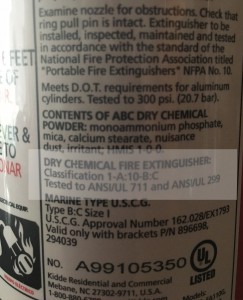
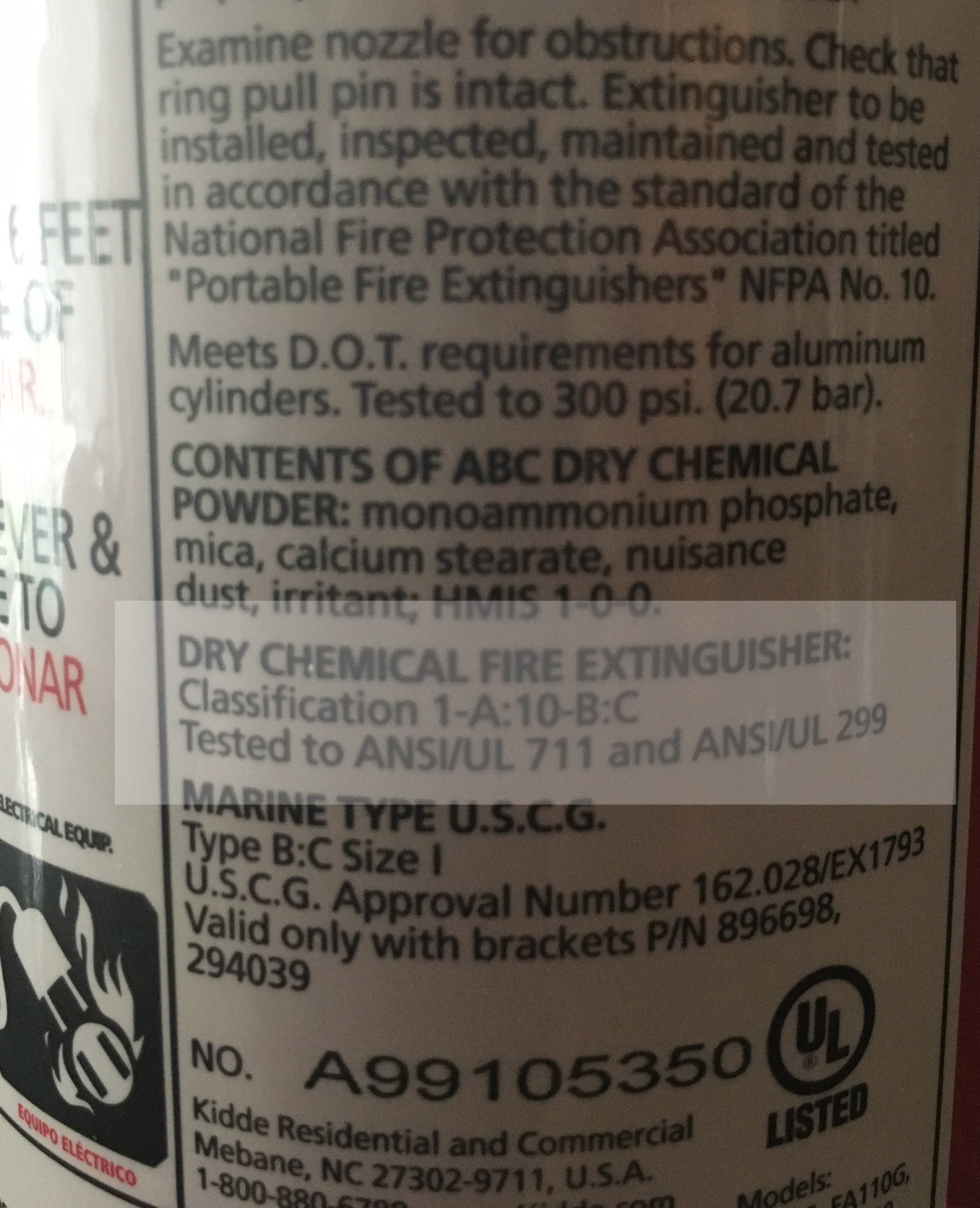
The rating for this fire extinguisher is 1A 10BC – as shown in the highlighted portion of the label.
What Types and How Many Extinguishers Should be On-Hand: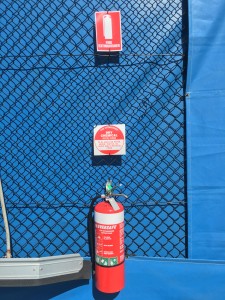 The list below is merely a guide; final extinguisher placement and quantity should be determined in conjunction with the local fire marshal / authority that has jurisdiction at your event or festival’s location.
- Outdoor stage with no pyro
- At least 1 ABC extinguisher – 5 pound minimum, preferably 2 of them – one on each side of the stage. A good rule of thumb is one every 75 feet at a minimum, but because it may be difficult to reach the other side of the stage given how much gear and performers are on it, having one extinguisher on each side, even it it’s less that 75 feet wide, is ideal.
- Outdoor stage with pyro
- At least 2 ABC extinguishers – 10 pound minimum, and 2 CO2 extinguishers – consult with your local fire marshall as well as the pyro company as they will have a better understanding of the total coverage needs based on the amount and type of pyro being used.
- Indoor stage with no pyro
- At least 2 ABC extinguishers – 5 pound minimum
- Indoor stage with pyro
- At least 2 ABC extinguishers – 10 pound minimum, and 2 CO2 extinguishers. Again, check with the local fire marshall and pyro company before confirming your fire extinguisher order.
- Outdoor tents
- At least 1 ABC extinguisher – 5 pound minimum – for each tent. Check with your local fire marshall to find out what the minimum size tent is for requiring a fire extinguisher.
- Within 30 feet of any oil based cooking equipment
- At least 1 K extinguisher
- Outside food vendors using propane
- At least 1 K extinguisher and 1 ABC extinguisher – 5 pound minimum
- Outside food vendors using electric ovens
- At least 1 K extinguisher and 1 ABC extinguisher – 5 pound minimum
- Areas where any combustible materials are stored
- At least 1 ABC extinguisher and consider 1 CO2 extinguisher
- In vehicle repair / maintenance buildings
- At least 1 ABC extinguisher for each working bay
- Next to any generators
- 1 ABC extinguisher – minimum 2.5 lbs – the size will be dependent on the size of the generator.
How to Use a Fire Extinguisher:
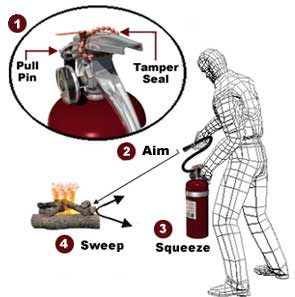
- PASS Method – courtesy of OSHA
- PULL… Pull the pin. This will also break the tamper seal.
- AIM… Aim low, pointing the extinguisher nozzle (or its horn or hose) at the base of the fire.
NOTE: Do not touch the plastic discharge horn on CO2 extinguishers, it gets very cold and may damage skin.
- SQUEEZE… Squeeze the handle to release the extinguishing agent.
- SWEEP… Sweep from side to side at the base of the fire until it appears to be out. Watch the area. If the fire re-ignites, repeat steps 2 – 4.


Search Guides and Articles:
Note: Event Professional searches excluded; visit those pages to search for those directly.
Hire An Event Professional


- #sxsw will be here before we know it - if you're a brand or company needing production / ops support for a SXSW act… https://t.co/mZMvF6Vva1
- Happy 2022! The FEP Live Team is available and ready to help any company needing production, ops, or staffing help… https://t.co/lrPpaTRlkm
- Our next podcast episode of Industry Insights is out - featuring April Harbour, Director of Festivals and Public Ev… https://t.co/josIoLinYD
- Proud to see our friends at @tmwc_live putting on their own Production Workshop, modeled after ours from last year.… https://t.co/hxWuevzzbc
- Check out @BackofHouseLive 's Festival All Call on @joinClubhouse - Thursday, March 25th at 8pm ET - some excellent… https://t.co/DxKk69LVtU
- Our 5th #podcast episode is up: Virtual Victories with Tami Richter of @sxsw and @EventSafety4All . She dives in… https://t.co/hzkd0P5Uaa
Newsletter Archives
- January 2021
- October 2020
- May 2020
- April 2020
- June 2018
- May 2018
- June 2016
- May 2016
- April 2016
- March 2016
- February 2016
- October 2015
- August 2015
- June 2015